

People, science and place
Who
we are.
We bring together research, population monitoring and veterinary medicine to reduce the impact of emerging infectious diseases on amphibians.


Research for conservation
Understanding decline.
Restoring populations.
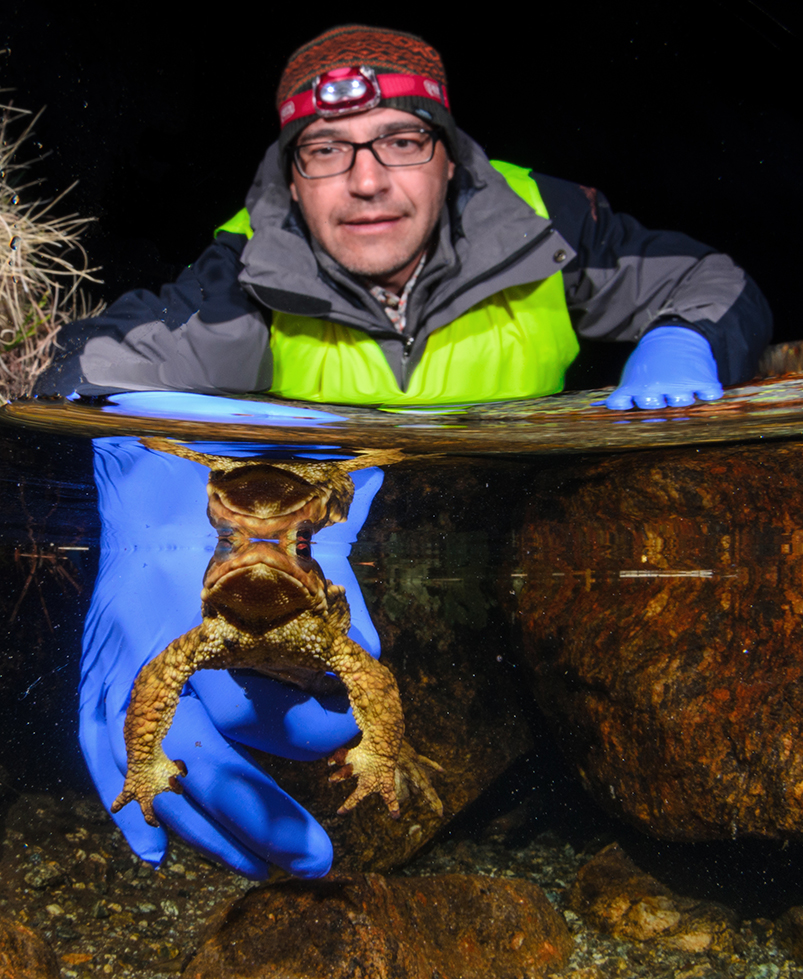
SOSanfibios combines long-term population monitoring, disease ecology and experimental research to understand amphibian declines. Working with wildlife managers and conservation networks, we turn that knowledge into disease mitigation, ecosystem restoration and, where needed, conservation breeding and population reinforcement.
years of amphibian research and conservation
scientific publications
research areas, from population monitoring to reintroduction
Our research
Questions that help
protect populations.
We study amphibians over time—from their interactions with pathogens to the recovery of populations and ecosystems.

Long-term monitoring
We track populations over many years to identify trends, detect declines and anticipate change.

Host–pathogen ecology
We investigate how amphibians, pathogens and their environment interact, and what shapes infection and resistance.

Ecological consequences of amphibian loss
We measure how amphibian loss alters aquatic communities and the way ecosystems function.

Disease mitigation
We design interventions to reduce transmission, improve survival and restore threatened populations.

Non-native species control
We design and evaluate measures to remove introduced species and restore sensitive habitats.

Conservation breeding and reintroduction
We develop breeding, population reinforcement and reintroduction programmes, followed by post-release monitoring.
How we make research possible
Rigorous science.
Collective action.
We combine diagnostics, fieldwork and partnerships to put evidence in the hands of decision-makers in Spain and beyond.
 01
01
From tissue to evidence
Precision diagnostics
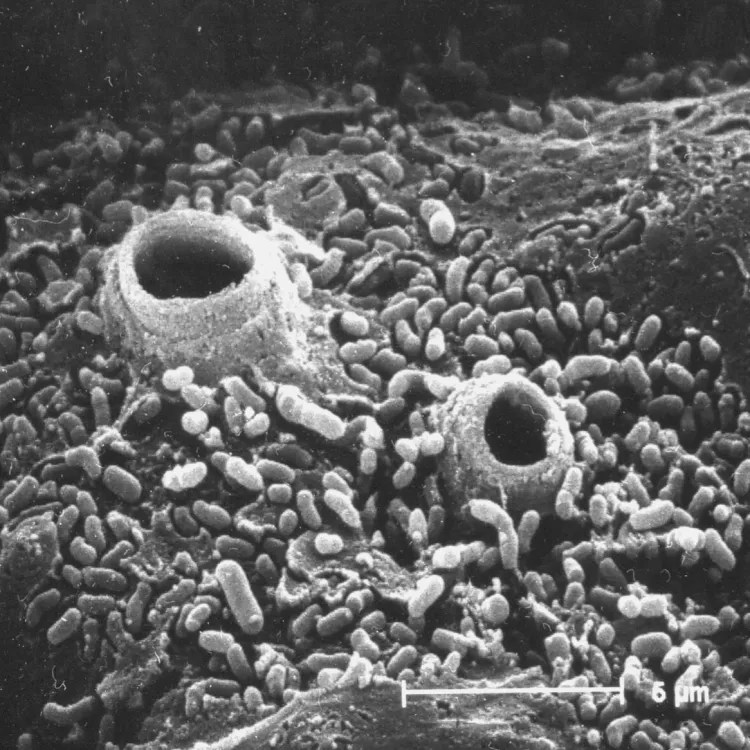
We use molecular and histological analyses to identify infectious agents and understand how they affect amphibians.
 02
02
Evidence in practice
Science-informed management
We advise wildlife managers and conservation teams across Spain, providing protocols, monitoring and responses tailored to local conditions.
 03
03
Expertise across borders
International conservation
We share tools and expertise with projects in other countries working to protect threatened species and populations.
 04
04
Combining strengths
A network with greater reach
We work with NGOs and associations across Spain to share alerts, local knowledge and the capacity to act.
Maintaining this surveillance and collaborative network requires sustained support.
Support our workThe team
The people behind
the science.
We work as one team, bringing together research, veterinary medicine, conservation and local knowledge—and sharing responsibility for the work.
Biographies and photographs published by SOSanfibios.org
Project founder
Research Scientist · CSIC
Dr Jaime
Bosch Pérez
A CSIC research scientist, Director of the Instituto Mixto de Investigación en Biodiversidad, head of the AHE monitoring programmes and founder of SOSanfibios.org.
He holds a PhD in Biology from the Universidad Complutense de Madrid and specialises in amphibian behaviour and acoustic communication. For the past 30 years, his research has focused on emerging infectious diseases in amphibians. He has authored more than 200 scientific publications and leads national and international research projects on amphibian conservation. He advises on the management of amphibian populations in several protected areas, has designed a range of population monitoring programmes and directs the Centro de Cría en Cautividad de Anfibios Amenazados de la Sierra de Guadarrama.
Project co-founder
Postdoctoral researcher · Charles University
Dr Barbora
Thumsová
A postdoctoral researcher at Charles University in Prague and co-founder of SOSanfibios.org. She holds a PhD in Ecology jointly awarded by the Universidad Autónoma de Madrid and the Universidad Complutense de Madrid.
For almost a decade, her research has focused on emerging infectious diseases in amphibians, tracing their origins and spread in wild populations and through the international pet trade. She investigates how human activity and climate change are enabling these pathogens to spread, and develops effective strategies to prevent and mitigate their impact on biodiversity. She is currently an MSCA COFUND CHARLESTON postdoctoral researcher, supported through a Marie Skłodowska-Curie programme co-funded by the European Union and Charles University in Prague, Czech Republic.
Veterinarian · Catalonia coordinator
Scientific Director · CRARC
Dr Albert
Martínez Silvestre
Scientific Director of the Centro de Recuperación de Anfibios y Reptiles de Cataluña. He holds undergraduate, master’s and doctoral degrees in Veterinary Medicine from the Universitat Autònoma de Barcelona.
He holds a diploma in Herpetological Medicine from the European College of Zoological Medicine (ECZM) and is an AVEPA-accredited specialist in exotic animals. He serves on the scientific advisory committees of Turtle Conservancy (California, USA), Le Village des Tortues (Carnoules, France) and AVEPA’s Exotic Animal Medicine Group in Spain. He has served as the lead veterinarian on projects involving giant lizards in the Canary Islands; giant tortoise introductions in Mauritius and Rodrigues; Mediterranean tortoise conservation in Catalonia; invasive turtle eradication in Catalonia; and “ECTOPYR: Los Ectotermos Pirenaicos como indicadores del Cambio Climático”. He coordinates the management of emerging infectious diseases in amphibians across Catalonia.
 Doctoral researcher · CSIC / University of Oviedo
Emerging infectious diseases and high-altitude ecosystems
Jesús Arca
Rubio
A doctoral researcher at CSIC and the University of Oviedo. He holds a degree in Biology from the Universidad de Granada and a master’s in Biodiversity and Conservation Biology from the Universidad Pablo de Olavide.
His doctoral research examines how emerging infectious diseases have shaped amphibian populations and diversity in Spain’s high mountains under a changing climate. It also evaluates mitigation techniques for potential use in affected areas.
 Doctoral researcher · Universidad Autónoma de Madrid
Ranavirus and ectothermic vertebrates
Fernando Rivada
Álvarez
A doctoral researcher at the Universidad Autónoma de Madrid. He holds a degree in Environmental Science from the Universidad de Salamanca and a master’s in Conservation Biology from the Universidad Complutense de Madrid.
Over the past ten years, he has worked in biodiversity conservation for NGOs and environmental consultancies in Spain and abroad. His doctoral project examines the impact of ranavirus on ectothermic vertebrates in Spain.
 Veterinarian · AHE Asturias
Wildlife and exotic animal medicine
Daniel Fernández
Fernández
He holds a degree in Veterinary Medicine from the Universidad de León and a master’s in emergency care and clinical practice for exotic animals from AEVA. He co-founded the local AHE Asturias group and is a member of both AHE and WDA.
With more than ten years’ experience as a veterinarian, primarily in wildlife medicine, he has contributed to amphibian and reptile projects including monitoring the Mediterranean tortoise population in Bovera and collecting amphibian samples for emerging disease analysis. He currently works as a veterinarian at the Centro de Recuperación de Fauna Silvestre del Principado de Asturias.
 Regional coordinator · Galicia
Monitoring and conservation
César
Ayres
Coordinator of the Galician regional group of the Asociación Herpetológica Española. He previously served as Conservation Officer and coordinator of the Iberian Emys orbicularis conservation group, and now serves as an area coordinator for the monitoring programmes.
He formerly served on the conservation committee of the Sociedad Herpetológica Europea and is a member of the IUCN Tortoise and Freshwater Turtle Specialist Group (TFTSG). He has helped detect emerging infectious diseases in the north-west of the Iberian Peninsula, notably during the ranavirus outbreak in Pontevedra.
The network is growing
The next vital observation
could be yours.
A single observation, sample or timely report could change the future of an entire population.