
Citizen science · filling critical data gaps
Your contribution could
make all the difference.
A single observation, sample or repeat survey could prove crucial in responding to a disease outbreak or filling gaps in our understanding.
A way to contribute that fits you
Five ways to help.
One shared goal.
You do not need to be a specialist to help. Choose the option that best matches what you have observed, the time you can offer and your connection with amphibians.
I have seen something concerning.
Report dead amphibians or animals showing unusual signs in the field.
↘ 02 · Filling data gapsI can collect samples.
Help establish the situation in under-studied areas through carefully planned sampling.
↘ 03 · Long-term commitmentI regularly visit an important site.
Monitor a population through the year, including visits when nothing unusual is observed.
↘ 04 · Captive collectionsI work with captive amphibians.
Monitor their health and help prevent disease transmission.
↘ 05 · Direct supportI would like to donate.
Choose one of our activities and help sustain amphibian conservation.
↘When something does not look right
Observe first.
Then report it.
You do not need to know the cause. A precise location and clear photographs allow our team to assess the finding and decide what to do next.
- 01Date and location
Pinpoint the location as accurately as possible.
- 02What you found
Species, life stage, sex if known, and number of animals affected.
- 03Detailed photographs
Select the freshest specimens and include an overview of the site.

Dead newly metamorphosed amphibians along the water’s edge.
They may die without obvious lesions and, because they are so small, can easily go unnoticed.

Haemorrhages, red spots, or loss of tissue or entire limbs.
Mortality can increase rapidly and affect different species or life stages.

Very early breeding.
Common frogs and common toads can freeze to death if cold weather returns abruptly after breeding has begun.
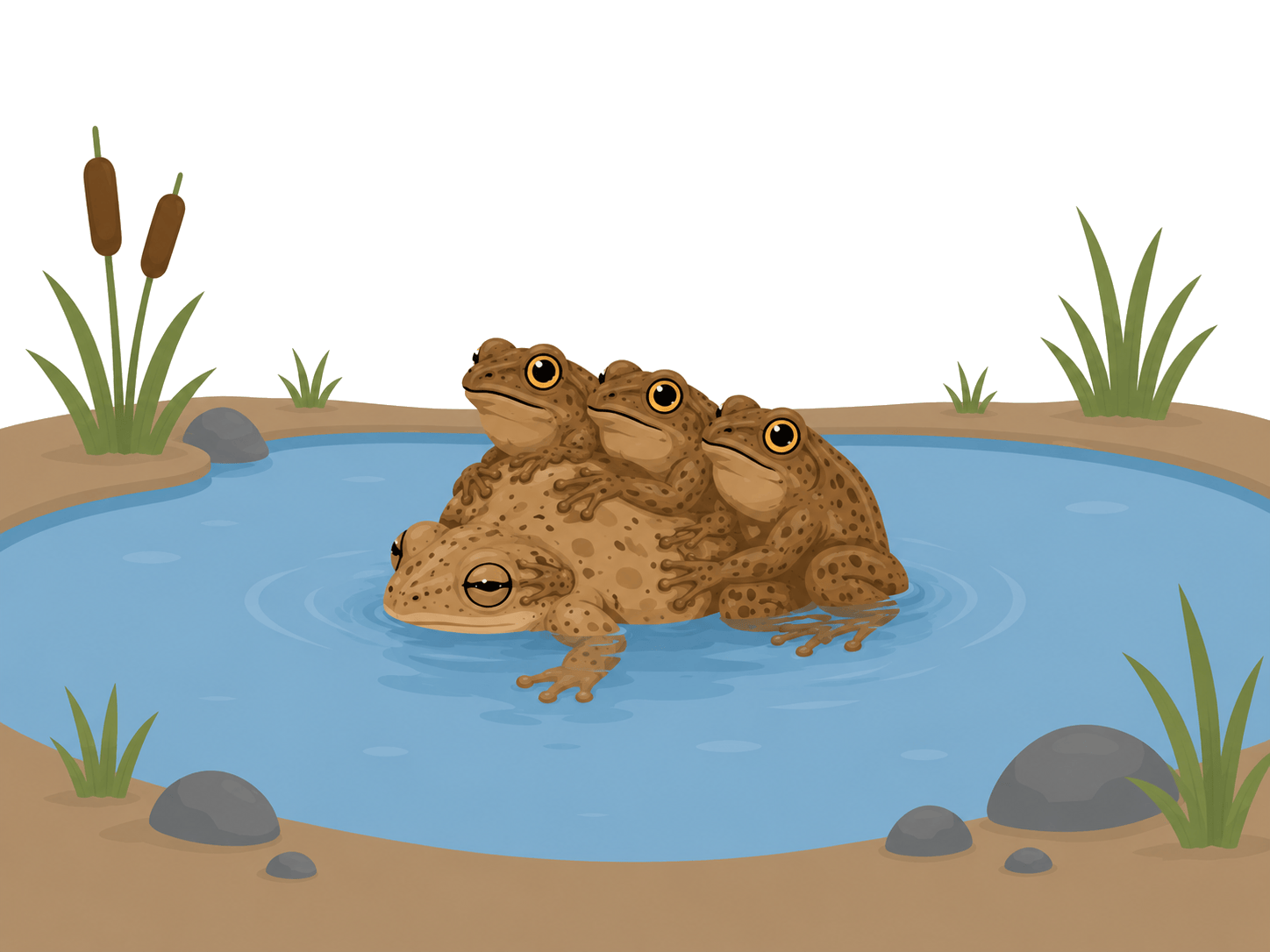
Drowning or exhaustion.
In some anurans, several males may clasp the same female at once, preventing her from surfacing to breathe.

No easy way out.
Adult fire salamanders are poor swimmers, and some females drown after entering the water to release their larvae when there is no easy way out.
Collect the freshest specimen and keep it frozen until you can speak to the team; for a very large animal, storing a limb may be sufficient. Afterwards, clean and disinfect with an alcohol-based disinfectant or bleach anything that touched the animal or the site.
Targeted field sampling
Samples from
under-studied areas.
Contact us before heading into the field.We will confirm whether the location is a priority, prepare the sampling materials and work with you to refine the sampling design.
Under-represented autonomous communities
Extremadura · Canary Islands · Castilla–La Mancha · Cantabria · Navarre
Provinces with insufficient data
Badajoz, Burgos, Cuenca, Gipuzkoa, Huelva, Las Palmas, Seville, Toledo, Tarragona and Valladolid.
International network
Do you work with amphibians? Let’s work together.
We welcome new collaborations in Spain and internationally with researchers, conservation teams and professionals who work with amphibian populations or hold samples collected through authorised activities.
Countries of particular interest
Working in another country? We would still like to hear from you.We are keen to contribute to initiatives where our expertise and analytical capacity can be useful.
Propose a collaboration
Design · 01
Safe sampling starts with the right number.
Collect 15 to 20 samples per population. If that is not possible, make up the total using other species present at the site, and ensure that different sampling sites are more than 10 km apart.

Handling · 02
One animal, one fresh pair of gloves.
Handle the animal gently and change disposable gloves between individuals, or disinfect them with alcohol and allow them to dry completely. This protects the animal and prevents cross-contamination.

Preparation · 03
The skin must be free of debris.
Gently remove mud, leaves and anything else that could interfere with the analysis. You can rinse the animal with water from the site, but do not use any substance brought in from elsewhere.

Moisture · 04
Damp, but not dripping.
If the animal is very dry, moisten it with water from the site. If it is dripping wet, allow it to dry slightly before sampling.

Swabbing · 05
Around 25 strokes, without causing harm.
For adults and urodele larvae, move the swab over the animal’s body using gentle, even pressure. Do not touch any other surface before placing the swab tip in the tube.

Tadpoles · 06
Only swab the mouth if the swab enters easily.
Use a small, fine-tipped swab. Never force it into the mouth or put the animal at risk.

Storage · 07
Seal, label and store.
Place the swab tip in the tube without touching any other surface, add a few drops of ethanol to soak the cotton, trim the excess shaft, close the tube and assign an individual code.

Fresh specimen · 08
A sample can reveal a wider story.
Swab and photograph the animal. If it is not decomposed and you are able to do so, preserve the whole specimen in alcohol for further study.

Documentation · 09
Records by email. Samples by post.
Email the sample record and send the tubes together with the signed collaboration agreement by post.
Address and downloadsActive monitoring
Repeat visits turn
a snapshot into a time series.
Choose this option only if you can return to a site with a known amphibian population at least twice within the same year.
Choose an established population
A pond, trough or any other site supporting an amphibian population.
Visit at key times
When animals complete metamorphosis and during heatwaves.
Inspect the site
Carefully examine shorelines, refuges and areas where amphibians leave the water.
Record zero results too
No mortality observed—or a visit when sampling was not possible—is still useful data if you also record the date, survey effort and environmental conditions.
Larvae can carry high Bd loads, but mortality often occurs at the end of metamorphosis. Newly metamorphosed animals are tiny, so search especially carefully along the water’s edge and beneath nearby refuges.
Suggest a monitoring siteCollections, animal traders and zoos
Good health monitoring
starts within the collection.
If you work with captive amphibians or keep them as pets, you can contribute through regular health screening.

Projects and donations
You can also help
sustain this work.
Choose a specific activity to support: sample analysis, fieldwork, equipment, or projects that have yet to secure funding.
Choose an activityEverything you need to get started
Get in touch.
We provide the materials.
Tell us how you can contribute and when you are available. We will send you the materials free of charge and analyse the samples at no cost to you.