

01
Projects and donations
Research delivers new insights.
Surveillance must continue.
Research grants fund specific studies, but they do not cover continuous disease surveillance, diagnostic testing, the shipment of sampling supplies or many other areas of SOSanfibios conservation work.


02
Current research projects
Funded research projects enable us to answer specific questions.
They do not cover ongoing surveillance or conservation work.
Research grants have defined aims, timelines and budgets. On their own, they cannot sustain all of SOSanfibios’ year-round work.
Project details
Origin and incidence of the emerging pathogen Ranavirus in Europe
This project assesses the presence of ranavirus and the risk it poses to wild and captive populations of amphibians, fish and reptiles in Central Europe and the Balkans.
The project examines how temperature is associated with mortality events and seasonal outbreaks, helping to strengthen disease surveillance and biosecurity measures.
- Ref.
- 26-23482I
- Funded by
- Grantová agentura České republiky (GACR)
- Period
- 2026–2029
- Funding
- €261,771
- Team
- IP: Barbora Thumsová
Project details
Supporting the recovery of amphibian populations declining due to emerging infectious diseases: an immunological approach
This project investigates why some populations recover from chytridiomycosis, focusing on amphibian skin immune defences and how they contribute to resistance and tolerance to Bd.
The project combines field sampling, molecular methods and historical museum specimens to investigate how immunity, habitat, microclimate and other factors shape recovery. It also evaluates mitigation measures including tebuconazole treatment and thermal refuges.
- Ref.
- PID2024-162285OB-I00
- Funded by
- Proyectos de Generación de Conocimiento, Ministerio de Ciencia e Innovación
- Period
- 2025–2028
- Funding
- €196,250
- Team
- IP: Jaime Bosch and Gonçalo M. Rosa
Project details
The emergence of ranavirosis in highly threatened species
This project investigates the emergence and impact of ranavirus in threatened amphibian populations in mountain national parks, focusing on highly susceptible species such as Rana pyrenaica.
Epidemiological studies, population estimates and historical samples are being used to reconstruct the emergence and spread of the virus, assess potential vectors and test new mitigation measures.
- Ref.
- 3396/2025
- Funded by
- Organismo Autónomo de Parques Nacionales
- Period
- 2025–2028
- Funding
- €88,360
- Team
- IP: Jaime Bosch · Co-IP: Verónica Martín García
Project details
Determining the origin of ranavirus and assessing its impact on wild amphibian and reptile populations and fish farms in Spain
This project assesses the health and demographic status of populations affected by ranavirosis and the role of fish as vectors of ranavirus transmission.
The project combines disease and population monitoring with in situ trials of mitigation measures designed to reduce the impact of disease and inform management.
- Ref.
- IND2024/AMB-33929
- Funded by
- Doctorados Industriales de la Comunidad de Madrid
- Period
- 2025–2028
- Team
- Predoctoral researcher: Fernando Rivada · IP: Annie Machordom Barbé · Co-IP: Jaime Bosch
Project details
Origin and emergence of ranavirosis in two highly endangered species in Spain (RANASPAIN)
This project investigates the mechanisms driving the emergence and evolution of ranavirus in Rana pyrenaica and Rana iberica, with particular attention to the environmental and biological factors that shape infection.
Genomic and experimental approaches are used to investigate viral diversity and evolutionary origins, and to determine how changes in temperature affect the course of infection.
Programme: CHARLESTON
- Ref.
- CHARL25-062
- Funded by
- Co-funded by the European Union and Charles University, Prague, Czech Republic
- Period
- 2025–2028
- Funding
- €177,750
- Team
- IP: Barbora Thumsová
Conservation does not follow funding cycles
A project may end. Disease surveillance cannot.
An outbreak can emerge at any time. Continued sample testing and field surveys are essential to detect it early.
03
Where your support is needed
Your donation funds
a specific action.
Choose how your donation is used. Each activity shows its annual funding requirement and the work your support will make possible.
 01
No dedicated funding
01
No dedicated funding
Sampling supplies and sample shipping
Laboratory consumables and shipping logistics so that network partners can collect and send samples correctly.
More information
We supply SOSanfibios partners with Eppendorf tubes, swabs, Falcon tubes and other laboratory consumables, and cover the cost of shipping supplies and returning samples.
 02
No dedicated funding
02
No dedicated funding
qPCR sample analysis
qPCR can detect very low concentrations of the three pathogens we monitor. Around €9 covers testing one sample for all three.
More information
Each year, we analyse approximately 2,000 samples collected by our partners outside funded projects. qPCR is far more sensitive than conventional PCR, and testing one sample for all three pathogens costs around €9.
 03
No dedicated funding
03
No dedicated funding
Monitoring the Mallorcan midwife toad in Mallorca
Since 2004, we have helped monitor populations of the Mallorcan midwife toad affected by Bd.
More information
Funding is needed to continue testing samples and to make at least one field visit each year as part of the monitoring programme for affected populations.
 04
No dedicated funding
04
No dedicated funding
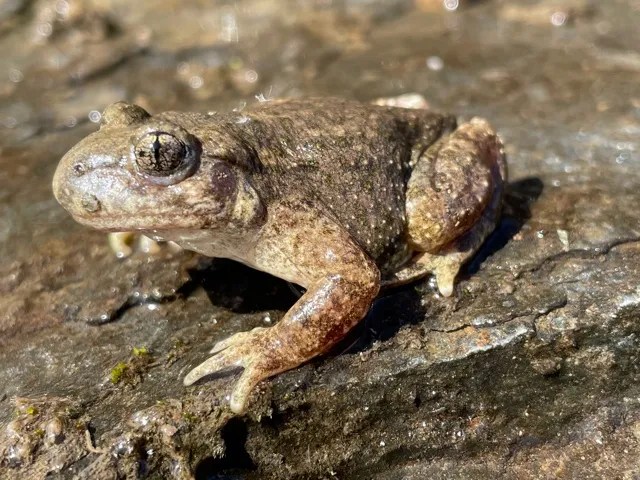
Monitoring the Betic midwife toad in Andalusia
Since 2009, we have worked with the Regional Government of Andalusia to monitor Alytes dickhilleni and mitigate the impact of Bd on affected populations.
More information
We test infection samples and help implement measures to mitigate the impact of Bd. Funding sustains this testing and travel to affected populations.
 05
No dedicated funding
05
No dedicated funding
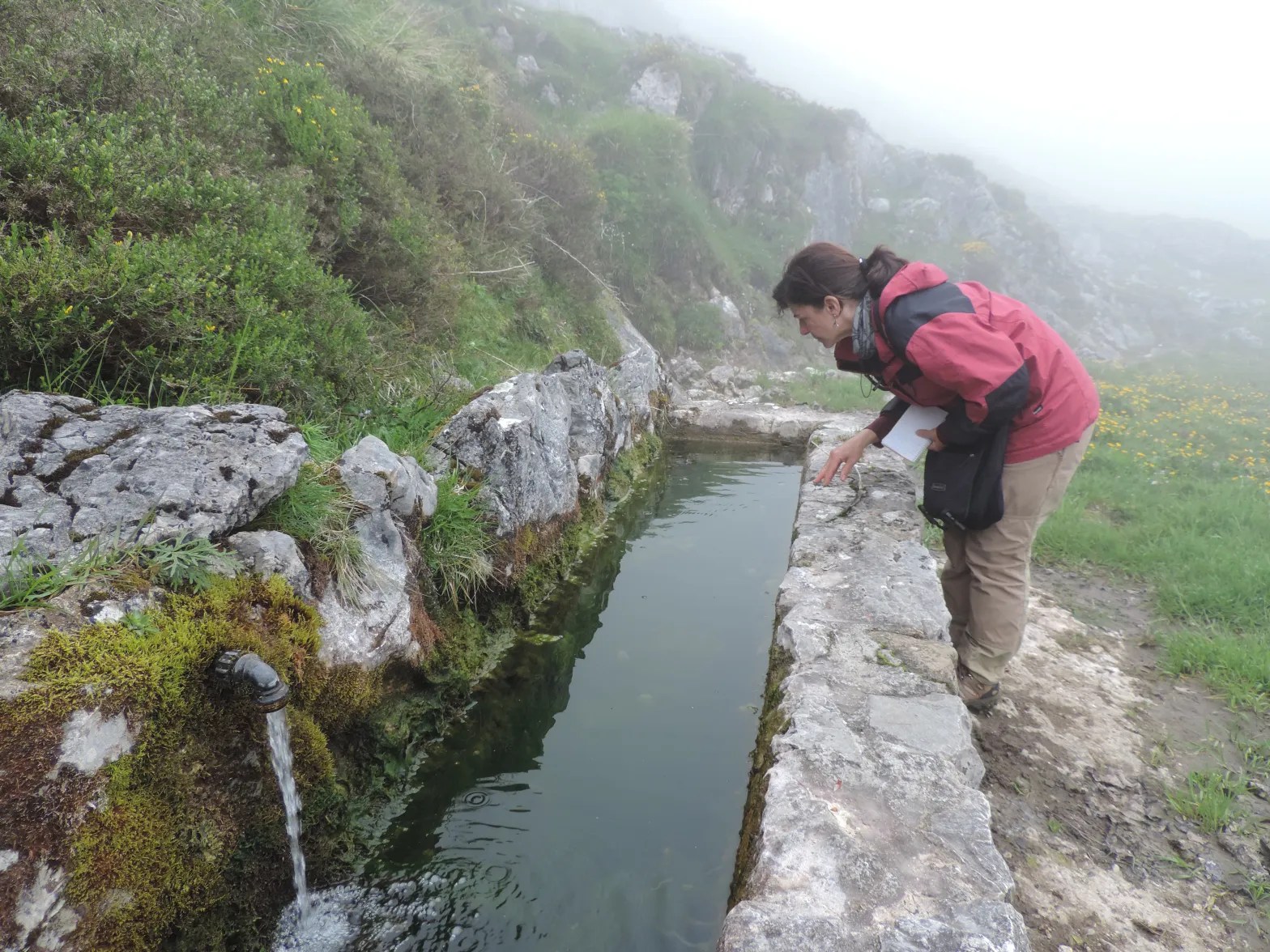
Disease surveillance in Picos de Europa National Park
Surveys at 24 sites, epidemiological analyses and repeat monitoring of priority populations.
More information
We analyse approximately 500 samples each year and make several field visits to the park. Funding is used primarily for epidemiological analyses and fieldwork.
 06
No dedicated funding
06
No dedicated funding
Collaboration with Proyecto Achoque
Disease expertise to support the conservation of Ambystoma dumerilii through sample testing and advice on Bd.
More information
We advise on mitigating the impact of Bd and analyse samples collected by project researchers. Funding is needed to cover laboratory analysis, shipping, supplies and at least one knowledge-exchange visit.
 07
No dedicated funding
07
No dedicated funding
International collaboration network
Sampling supplies, laboratory analysis and scientific support for conservation teams in Cameroon, Venezuela, El Salvador and other countries.
More information
We provide sampling supplies and analyse samples in our laboratories. Costs include supplies, travel, permits, international shipping and laboratory analysis.
 08
No dedicated funding
08
No dedicated funding
Outreach and open-access resources
Scientific and educational content for partners, conservation practitioners, researchers and the wider public.
More information
SOSanfibios, this website, educational materials, partner resources and the printing of outreach materials all involve costs. Funding is needed to create more freely available scientific and educational content.
04
Your donation
Choose where it goes.
Support a specific action.
Review what your donation will support, then continue.
Secure donation form
Select an activity first
Choose an activity above to continue.
Your chosen activity will remain selected throughout the donation process.
05
Community
The people who
make this work possible.
Every donation helps sustain sample testing, field surveys and other work that must continue throughout the year. Your support allows us to keep working between grants.
Sampling supplies, laboratory analysis and fieldwork can continue thanks to your support for amphibian conservation.
Transparency and traceability
Every donation should show
what it has made possible.
Annual targets reflect the needs of each campaign. Donations are administered through the Asociación Herpetológica Española, and progress updates explain which goals they have helped us reach.
- Donation allocated to the activity selected.
- Targets and funds raised shown for each campaign.
- Secure payment and receipts handled by the platform.
06
Frequently asked questions
Before you
donate.
Can I choose which activity my donation supports?
Yes. Each activity has its own funding needs, and your donation is allocated to the one you select.
Is my donation processed on this page?
You will donate through a secure form linked to the activity you selected.
Can my name appear on the donor list?
Yes, if you choose to make it public in the form. You can also donate anonymously.
Your samples can provide vital evidence