

Emerging infectious diseases in Spain
An invisible
threat.
A very real toll.
Fungal pathogens and viruses have already caused mass mortality and population declines in Spain. Knowing where they occur—and detecting a disease outbreak early—can change the outcome.
A crisis unfolding even where habitats appear intact
Amphibians are disappearing.
of amphibian species are threatened.
species may have become extinct in recent decades.
Amphibians are the most threatened vertebrate group on Earth.
Their decline has many causes.
Habitat loss and degradation, climate change and introduced species are among the most important.
But another threat is becoming increasingly urgent: emerging infectious diseases. Across the world, they are causing mass mortality, population collapse and even the disappearance of some species.

They can strike even where everything appears to be fine.
Protected areas · well-preserved habitatsHow infection causes harm
Two diseases.
Two very different forms of damage.
Mass mortality events in Australia and Central America, followed by Europe, exposed two major emerging infectious diseases of amphibians:
chytridiomycosisandranavirosis.
They are caused by entirely different pathogens and harm amphibians in different ways.
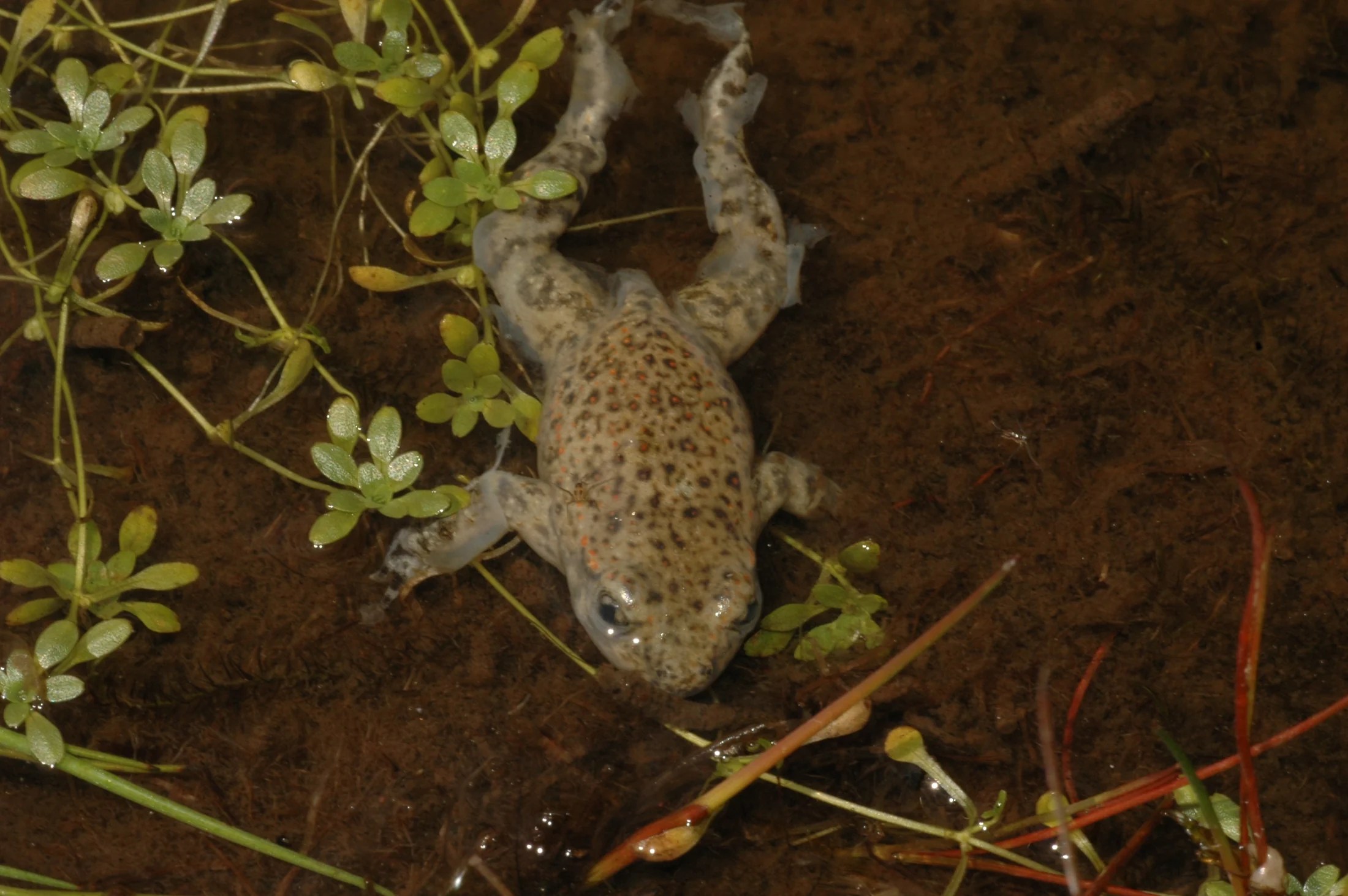 Damage begins in the skin
Two chytrid fungi
A disease that attacks a vital organ: the skin.
Chytridiomycosis is caused by two chytrid fungi: Batrachochytrium dendrobatidis (Bd) and Batrachochytrium salamandrivorans (Bsal).
Bd and Bsal colonise keratinised tissues in amphibians. When these parasites invade the skin, its ability to transport chloride and sodium ions is impaired. This causes severe osmotic imbalance, cardiac arrest and, ultimately, death.
Possible signs
The pathogen


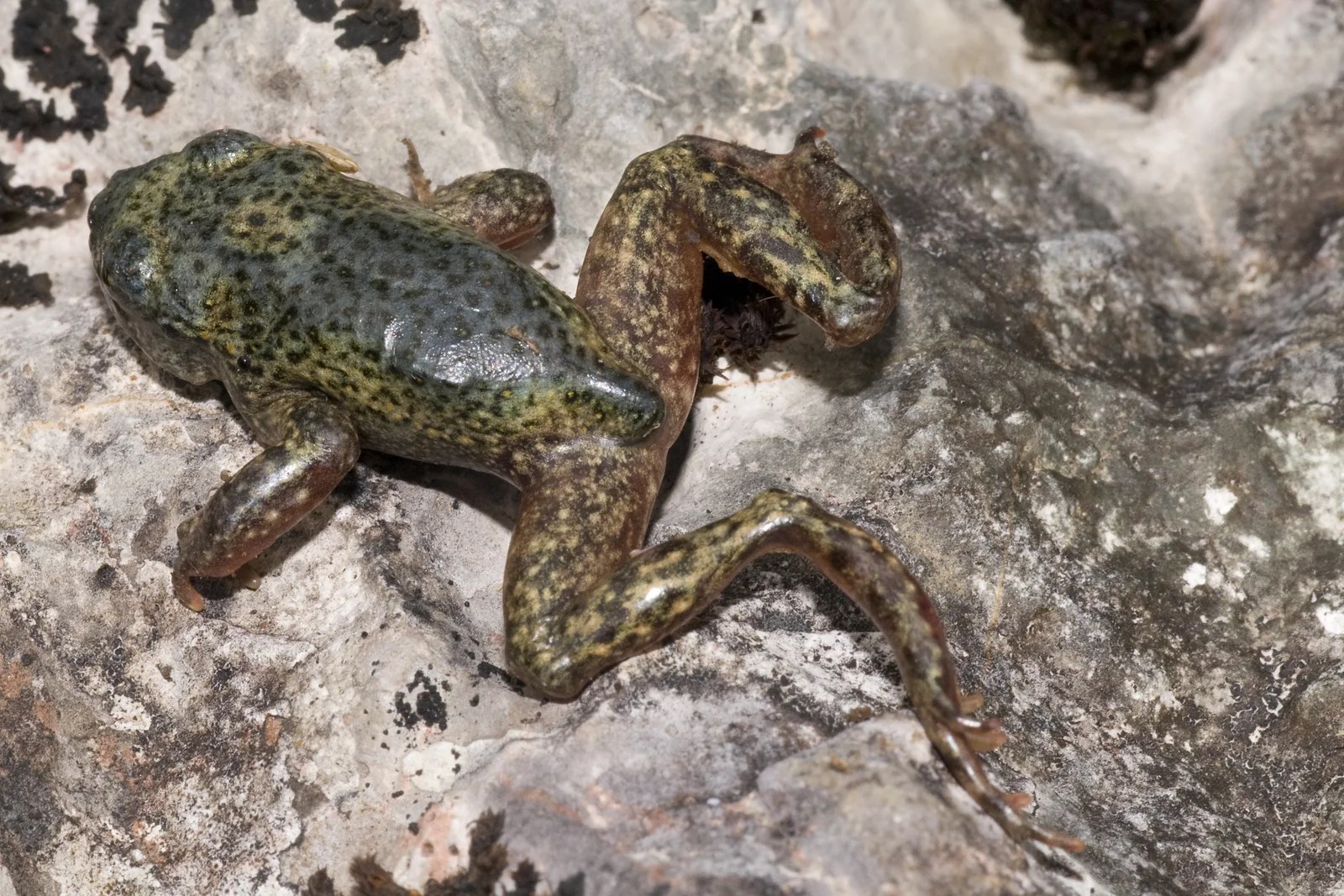
Batrachochytrium dendrobatidis
Bd: worldwide distribution, many host species.
Bd occurs mainly in the outermost layer of the epidermis. It affects a wide range of amphibian species and is distributed across much of the world, including Spain.
Its effects are often more visible in tropical regions because it affects both recently metamorphosed amphibians and adults. In temperate climates, mortality can be easier to miss because it is often concentrated among newly metamorphosed individuals, which are so small that they can be difficult to detect.
Possible signs
- Abnormal skin shedding, reddened skin or unusual posture
- Lethargy and loss of coordination
- Deaths of newly metamorphosed amphibians along the water’s edge

Two fungi that attack the skin, and a group of viruses capable of invading many different tissues.
Documented distribution
Mapping disease across
the Iberian Peninsula.
Across the Iberian Peninsula, Bd and Ranavirus are widespread. Bsal remains restricted to a single known location in Catalonia.
Outbreak timeline
Decades of warning signs.
Increasingly visible.
Across the region, both diseases have caused mass mortality events with severe impacts on wild populations. Their emergence and severity are closely linked, among other factors, to environmental conditions that are being increasingly altered by climate change.

- 01Document it
Photograph the animal and the site.
- 02Record the location
Note the coordinates, date and number of animals affected.
- 03Report it
Share the information with our team.